Jaipur weekend trip from Delhi NCR: a student guide
Short break · from Delhi NCR · checked 4 October 2026
Jaipur is the easiest big-heritage city on this site to plan as a short break: a walled old city, forts on the hills and a lot of food. This guide lists what to see, what to eat, when to go and what to price before you commit.
Jaipur at a glance
- Where
- Jaipur, Rajasthan
- Good for
- Forts, palaces, old-city walks, street food
- Time to allow
- Two days is workable; three if you want the hill forts at an easy pace
- Getting there from Delhi NCR
- Train, bus or car on a road/rail route – compare the full return journey yourself
- Check before you go
- Ticket rules, opening days and your return service
Planning notes are editorial. Facts are from the sources listed below.
What to see in Jaipur
Jaipur has more sights than a weekend can hold, so cluster them by area instead of ticking a list.
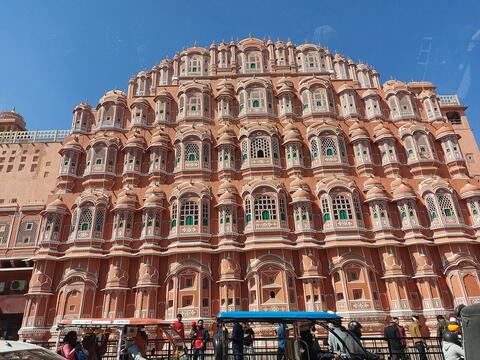
Hawa Mahal
Rajasthan Tourism lists it among the city's main attractions. It is best treated as a stop in the old city, not an all-day plan.
Source: Rajasthan Tourism
City Palace
A palace complex in the old city, still a good anchor for a morning. Rajasthan Tourism lists it with Hawa Mahal and Jantar Mantar, so these three sit naturally in one day.
Source: Rajasthan Tourism
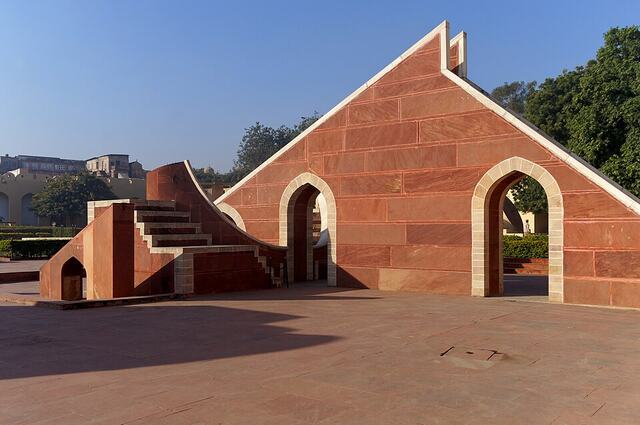
Jantar Mantar
An observatory of large stone instruments. Wikivoyage notes it as a UNESCO World Heritage Site. The shapes also make it one of the easier places to photograph.
Source: Wikivoyage
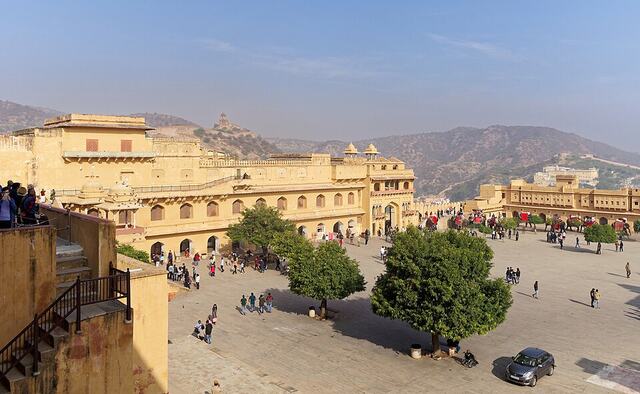
Amber Fort
A hill fort just outside the city, also UNESCO-listed according to Wikivoyage. Wikivoyage has a separate section on its fees and arrangements, so check what applies to your day.
Source: Wikivoyage
Nahargarh and Jaigarh
Two more hill forts that look over the city. Good for views if you have a third day or an extra half-day.
Source: Wikivoyage
Jal Mahal and Galtaji
Wikivoyage lists the lake palace and the Galtaji temple complex among the extra stops once the main sights are done.
Source: Wikivoyage
Albert Hall Museum
Opened in 1887 as a public museum in Indo-Saracenic style, inside Ram Niwas Garden. Useful for a hot afternoon.
Source: Wikivoyage
Anokhi Museum of Hand Printing
A small museum on hand block printing, in a restored haveli in old Amber. A quieter alternative if you are tired of crowds.
Source: Wikivoyage
Food
Wikivoyage's Jaipur food list singles out pyaz ki kachori, ghewar and mawa kachori, plus lassi. Ghewar is the sweet linked to the Gangaur festival (the day after Holi, running about 18 days). Listed prices in Wikivoyage are dated, so ask for the price before you order.
When to go
Wikivoyage describes a semi-arid climate with a monsoon from June to September and very hot weather in May and June. For a student budget break, the cooler months are the comfortable choice. Check dates for Gangaur if you want the festival crowd – or want to avoid it.
Getting there from Delhi NCR
Jaipur is reached from Delhi NCR by rail, bus or car. Pick the return service first, then plan the day. Compare operator timetables and prices on the day you book; this guide does not quote them.
Local etiquette
- Dress for temples and forts: covered shoulders and knees are a safe default, and you will often leave shoes outside.
- Ask before photographing people.
- Carry water and sun protection – old-city walks have little shade.
Watch-outs
- Wikivoyage warns about autorickshaw scams. Agree the fare, or use a metered or app-based option, before you start.
- Wikivoyage also describes a "gem scam": strangers who invite you for tea and a visit to a gem shop. Politely decline.
- The old-city lanes are crowded and uneven. Keep bags in front and watch for traffic.
A sample outline
An editorial outline, not a booked tour or a verified timetable. Change it to match your own transport.
- Day 1. Old city: Hawa Mahal early, then City Palace and Jantar Mantar. Lunch nearby. Evening walk through the bazaars if you have energy.
- Day 2. Amber Fort in the morning before the heat, a museum or lake stop after lunch, then leave with a buffer for the return journey.
What to put in your budget
This guide gives no prices. Check live quotes and write the date next to each one.
- Return transport from your Delhi NCR starting point (both directions)
- One night's stay, if you stay over
- Entry tickets: ask whether a student or composite ticket applies
- Food and water
- Local travel: autorickshaw, app cab or bus
- A reserve for delays
Sources
Facts marked Wikivoyage are summarised from Wikivoyage, available under CC BY-SA 4.0. Prices and timings there are dated, so this guide does not repeat them as current. Last checked 4 October 2026.
Photo credits
- Hawa Mahal: Shupna · CC BY 4.0 · resized and cropped
- Amber Fort: Jakub Hałun · CC BY-SA 4.0 · resized and cropped
- Jantar Mantar: Jakub Hałun · CC BY-SA 4.0 · resized and cropped


